

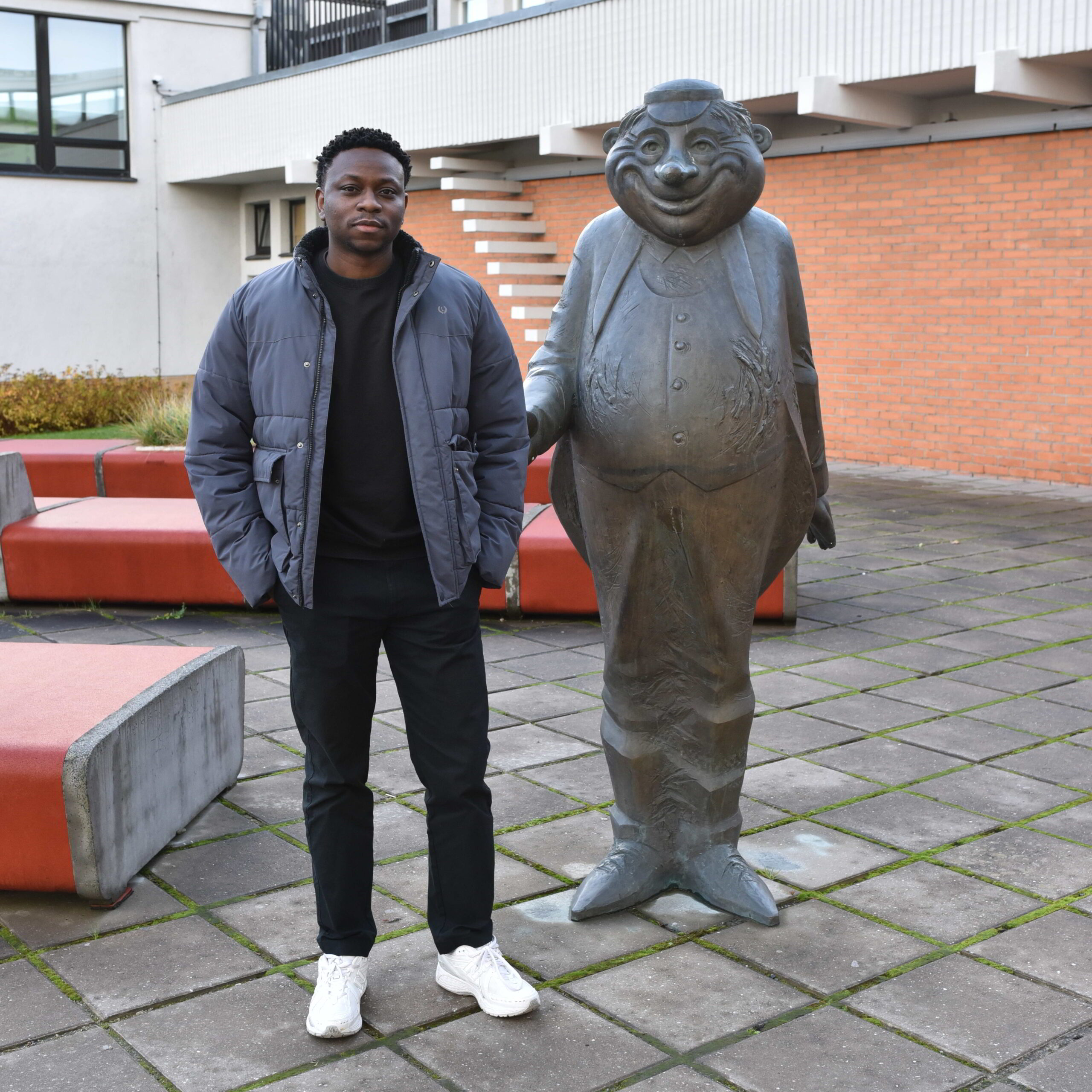
Welcome to the Team
The Centre for Intelligent Systems at TalTech warmly welcomes our new colleague and PhD candidate, Jesutomito Praise Morakinyo! His doctoral research, “Hybrid Modelling of…

The Centre for Intelligent Systems of TalTech University focuses on advanced system modeling methods, data science, machine learning, digital twins, and virtual and augmented reality based on two research laboratories which are currently in the process of merging into a single Intelligent Systems lab.

Centre for Intelligent Systems was established on January 1, 2017 in the Department of Computer Systems on the basis of Control Systems Research Laboratory, Chair of Automatic Control and System Analysis and Chair of Circuit Theory and Design from the former Department of Computer Control of Tallinn University of Technology.
All knowledge, skills, and expertise from Machine Learning and Control Theory have allowed the Centre personnel to proceed to tackle research endeavors related to Intelligent Systems with full force. In 2015, we have also established the XR laboratory to complement our research with digital twins and extended reality.

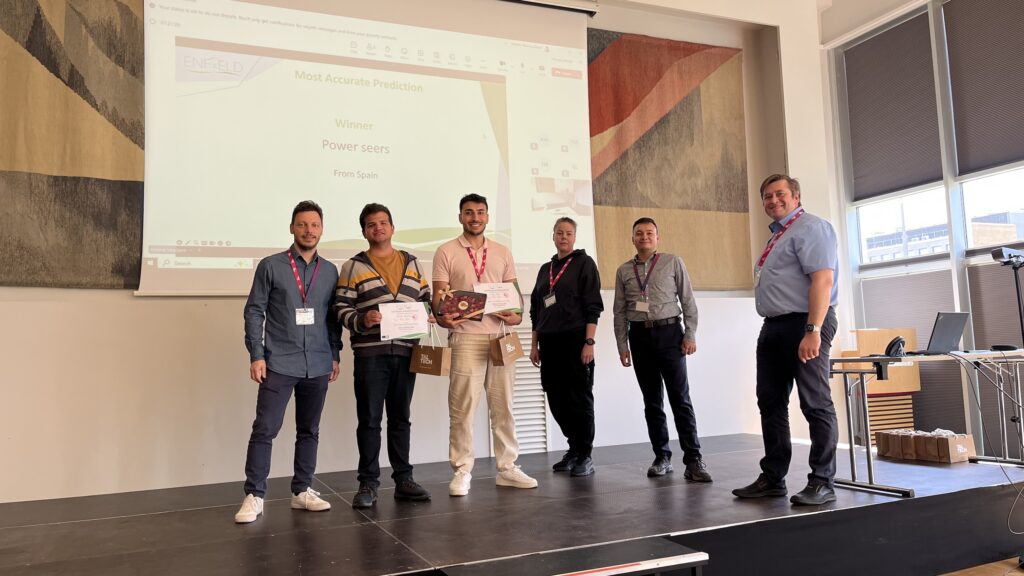
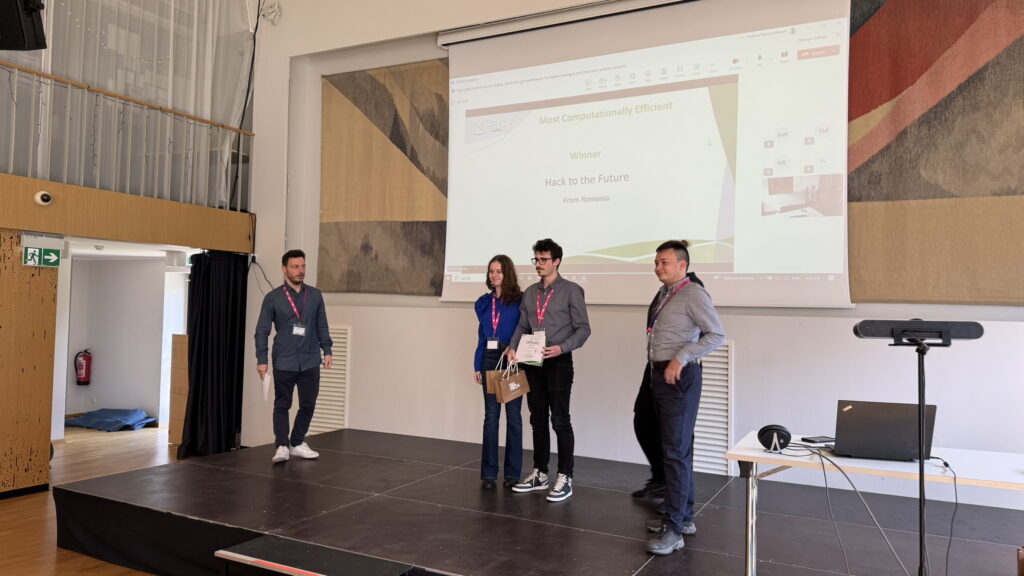
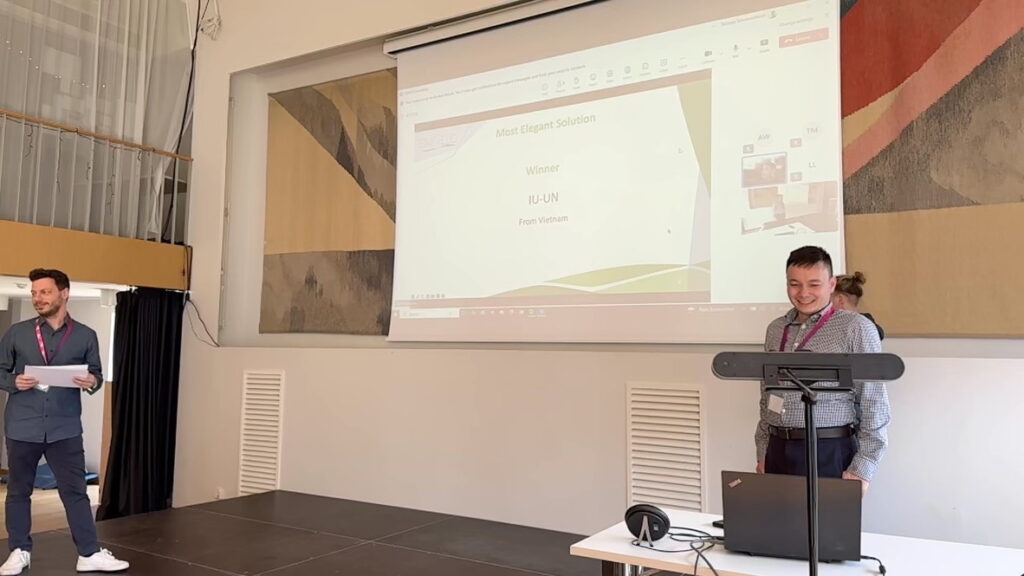
The ENFIELD Hackathon 2025 “AI for Energy Efficiency” took place on 29–30 May 2025 at Tallinn University of Technology. It closed a three-stage competition that started with the call for participants on 1 March 2025. Fourteen teams from eight countries (UK, Turkey, Romania, Ireland, Spain, Slovenia, Estonia, Germany) registered. Seven teams reached the final, which was held on site and streamed online.
Teams worked on a practical problem: predicting a year of hourly electricity use for a “new” campus building from only two months of its data. They used real consumption data from TalTech campus buildings, building areas and local weather data. Using real operational data, and releasing the new building’s data only at the final event, meant teams had to build methods that generalise rather than fit one dataset.
Solutions were judged in three categories.
Each winning team received €500. The top teams in the accuracy category scored very close to each other, which shows how strong the solutions were. Rewarding simplicity and efficiency as well as accuracy reflects ENFIELD’s focus on green, resource-aware AI.
The event brought together students and young researchers with an international jury from NTNU, TU Chemnitz and TalTech, and with industry through a keynote by R8 Technologies.

The ENFIELD Project is co-funded by the European Union. Views and opinions expressed are however those of the author(s) only and do not necessarily reflect those of the European Union or DG CNECT. Neither the European Union nor the granting authority can be held responsible for them. The University of Nottingham’s participation in the Horizon Europe Project ENFIELD is supported by UKRI grant number 10094603.

This project was devoted to research and development of an artificial intelligence based system for classification and risk groups determination of motor insurance clients. This is an applied research project developed for the insurance company Ergo Insurance SE.

The doctoral thesis of Aleksei Tepljakov was recognized as an outstanding thesis and published in Springer Theses category “Computational Intelligence and Complexity” in 2017. More information about the associated project FOMCON can be found at https://fomcon.net/


